

 Mr. Perry Wu International Sales Director


Suoyi Alumina powder Al2O3 is used in ceramic materials and high-tech fields
Alumina powder Al2O3 is used in ceramic materials and high-tech fields.
Alumina powder (Al₂O₃) is an extremely important and widely used inorganic nonmetallic material. Because of its excellent physical and chemical properties, it plays a key role in many industrial and high-tech fields.

Main application fields of alumina powder
Refractory materials: refractory bricks, castables, plastic refractory, ceramic fibers, etc., which are used for lining of high-temperature industrial furnaces such as iron and steel smelting (lining of blast furnace, converter and ladle), cement kiln, glass melting furnace and petrochemical cracking furnace.
Very high melting point (about 2054℃), excellent high-temperature stability, good thermal shock resistance (especially after particle grading optimization) and resistance to molten metal and slag erosion.
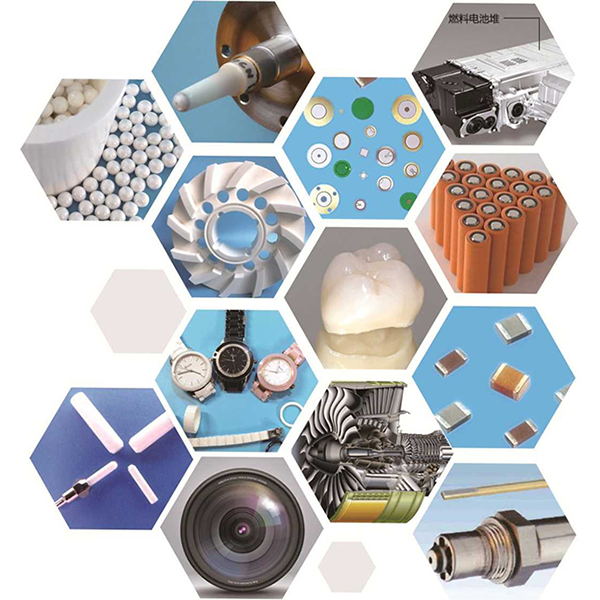
Ceramic materials, structural ceramics, manufacturing wear-resistant parts (such as sealing rings, bearings, nozzles, cutting tools), chemical corrosion-resistant parts, bulletproof armor pieces, textile ceramics, etc.
Electronic ceramics are used as integrated circuit substrates (such as high-alumina ceramics with 96% and 99% Al₂O₃ content), packaging materials, vacuum tube shells, insulators, spark plugs, etc. Especially, high-purity alumina (above 99.5%) is an important electronic substrate material.
Bioceramics, used in artificial joints (hip joints and knee joints) and dental implants (roots and crowns), benefit from their good biocompatibility, high hardness and wear resistance.
High hardness, high strength, excellent wear resistance, good electrical insulation (especially high-frequency insulation), chemical stability, and can be molded into complex shapes by sintering process.
Grinding and polishing materials: abrasives, manufacturing grinding wheels, abrasive belts, sandpaper, sandblasting abrasives, etc., used for grinding, cutting and surface treatment of metals, wood, glass and other materials. Commonly used calcined alumina (brown corundum, white corundum, etc.).
Polishing powder, high-purity ultrafine (nanometer or submicron) alumina powder is used for high-precision polishing of optical glass, sapphire screen, semiconductor wafer (silicon wafer), hard disk substrate, precision metal devices and so on.
Extremely high hardness (Mohs hardness 9, second only to diamond and silicon carbide), good controllability of particle shape and size (especially critical for polishing powder).
Catalyst and catalyst carrier: widely used in petrochemical industry (catalytic cracking, hydrofining, hydrodesulfurization), automobile exhaust purification (three-way catalyst carrier), chemical synthesis (such as Claus desulfurization) and other fields. Especially, γ-ALO is widely used as a carrier because of its high specific surface area and surface acidity.
High specific surface area (γ phase), good thermal stability, certain surface acidity (adjustable), controllable pore structure and good interaction with active components (such as Pt, Pd, Ni, Co, Mo, etc.).
Coating material: Alumina coating is formed on the surface of metal substrate by thermal spraying (plasma spraying, flame spraying), vapor deposition, sol-gel, etc.
Function, providing high-temperature oxidation resistance, corrosion resistance, wear resistance, electrical insulation, barrier and other functions. Commonly used in aero-engine blades, chemical equipment, electronic components and so on.
Fillers and additives: composite materials added to polymers (such as epoxy resin, nylon, silicone rubber) or metal matrix to improve hardness, strength, wear resistance, thermal conductivity, insulation or dimensional stability. Used for manufacturing electronic packaging materials, heat conductive gaskets, wear-resistant parts, etc.
Special paper/film, as a functional filler, can improve barrier property, wear resistance and printability.
Toothpaste, mild friction agent.
Other fields: adsorbent, activated alumina has porosity and surface activity, and is used for drying gas and liquid (absorbing water), defluorinating water treatment, chromatographic separation, etc.
Laser material, alumina single crystal doped with specific ions (such as Cr, namely ruby) is an important solid-state laser gain medium.
Artificial gem, single crystal alumina (sapphire, ruby) is used in jewelry, watch mirrors, optical windows, etc.
Battery material, as a coating (such as coating on the separator of lithium ion battery) to improve safety and thermal stability; New battery systems such as sodium ion batteries are also being studied.
Main characteristics of alumina powder
1. High hardness and wear resistance: Mohs hardness is as high as 9, which is an excellent wear-resistant material.
2. High melting point and excellent thermal stability: the melting point is about 2054℃, and it can maintain excellent physical and chemical properties at high temperature.
3. Good chemical stability: Good resistance to most acids, alkalis and solvents (except strong acids and alkalis) and good corrosion resistance.
4. Excellent electrical insulation: it is an important electrical insulation material with high resistivity at room temperature and outstanding high-frequency insulation performance.
5. High strength and rigidity: Especially after dense sintering, alumina ceramics have high mechanical strength and rigidity.
6. Good optical properties: Single crystal alumina (sapphire) has excellent light transmittance (from ultraviolet to infrared band) and optical properties.
7. Polymorphism and adjustable properties: There are many crystal forms (α, γ, θ, κ, δ, η, etc.), and the most common ones are α-ALO (corundum phase, the most stable, high hardness and high density) and γ-ALO (activated alumina, high specific surface area). By controlling the crystal form, purity, particle size and morphology, its properties (such as specific surface area, catalytic activity, sintering performance, polishing performance, etc.) can be greatly controlled.
8. Biocompatibility: High-purity compact alumina is inert in human environment and has good histocompatibility, so it is suitable for biomedical implants.
9. Wide sources of raw materials: the main raw material bauxite is rich in reserves.